
Join Low Voltage Nation — Find project opportunities and showcase your company to thousands of industry professionals
Northampton and Provident target late-2027 delivery of 54 MW of critical capacity in the North Dallas Corridor. The parcel, utility agreement and construction teams remain undisclosed.
Northampton Capital Partners and Provident Data Centers are planning a 54 MW critical-capacity AI data center in the North Dallas Corridor, with delivery targeted for late 2027. Their September 3 joint-venture announcement puts a named development team behind a new project in the Dallas-Fort Worth market. For fiber, cabling, security and controls firms, the useful opening is early project intelligence: the sponsors are public, while the construction buying chain remains undisclosed.
The issuer announcement describes a turnkey facility intended for AI and inference workloads, situated on a site characterized as 74 MW. Those figures describe different things. The announcement does not define the relationship between them or disclose a utility service agreement. The project is at the announced-development stage; public evidence reviewed September 5 does not establish a construction start.
Project snapshot
| Item | Reported position | Open detail |
|---|---|---|
| Location | North Dallas Corridor, Texas | Municipality and parcel |
| Critical capacity | 54 MW planned | Acceptance milestones |
| Site figure | 74 MW described | Power-service definition |
| Delivery | Late 2027 target | Construction schedule |
| Development stage | Joint venture announced | Permits and mobilization |
| Investment | Project budget undisclosed | Financing and contracts |
| Construction team | No GC/CM named | Design and trade awards |
The missing address matters. North Dallas Corridor is a market description, and the partners have not identified the exact municipal jurisdiction, acreage or street address in the reviewed project announcements. A contractor cannot reliably find the relevant zoning case, building permit or utility crossing from the market label alone. Provident's corporate office address should not be used as the construction location.
The named companies and their actual roles
Simpson Thacher's September 3 transaction announcement confirms that it advised Northampton on the joint venture. The firm also confirms the critical-capacity figure, site description and delivery target. This is direct confirmation from a transaction participant; it does not establish an awarded construction contract.
| Company | Confirmed role | Source |
|---|---|---|
| Northampton Capital Partners | JV investment partner | Company |
| Provident Data Centers | JV development partner | Services |
| Simpson Thacher & Bartlett | Northampton legal counsel | Transaction |
| Haynes and Boone | Provident legal counsel | Transaction |
| Citizens Capital Markets | Provident financial adviser | Issuer release |
Haynes Boone's September 4 release identifies its work on joint-venture negotiation and documentation, with assistance on related leasing matters. The announcement names Jeffrey Moerdler and Andrew Silberstein as leading the JV work and Stephen Friedberg on leasing. That legal work provides transaction context. The release does not identify a tenant or disclose an executed customer lease.
Northampton's corporate site describes an infrastructure investment strategy and approximately $1.6 billion of assets under management as of July 31. That is a firmwide figure. It supplies no project construction budget. Citizens' financial-advisory role similarly provides no evidence of a committed construction loan, debt amount or financing close.
Provident's development-services page covers site selection, entitlements, design and construction management. These capabilities explain its development role. They do not identify the eventual general contractor, electrical prime or technology integrator for this facility. Contractor outreach should follow an authenticated procurement channel once the project team publishes one.
How to read the power and delivery claims
For estimating purposes, retain the 54 MW critical-capacity target and the separately described 74 MW site figure as distinct inputs. Assigning the difference to cooling, electrical losses, spare capacity or future expansion would require design information that is absent here. Calculating a project efficiency ratio from these two announcement figures would therefore overstate what the evidence supports.
The same discipline applies to delivery. A late-2027 target gives contractors a window to monitor. A dependable mobilization plan would require more detail: site readiness, approved drawings, long-lead equipment, utility energization, building completion, systems testing and customer acceptance. These are analytical questions for the development team, rather than published milestones for this project.
The issuer also attributes water-efficiency and quiet-operation claims to Provident's design approach. The public release does not supply the water accounting boundary, cooling schematic or acoustical criteria. Those claims should remain attributed developer statements. They cannot establish a particular cooling vendor, eliminate every source of water consumption, or substitute for project engineering and operating records.
Where low voltage could enter the work
The strongest project-specific connection to LVN's trades is the developers' emphasis on connectivity for inference workloads. The following table is prospective scope analysis. No reviewed announcement names a carrier, cabling contractor, security integrator, fire-alarm contractor or controls package holder, and no open solicitation is established.
| Work area | Potential package | Evidence to request |
|---|---|---|
| Fiber and OSP | Routes, entrances, splicing | Carrier and civil plans |
| Structured cabling | Pathways, terminations, labels | Technology specifications |
| Access control | Doors, gates, credentials | Security design |
| CCTV | Cameras, recording, networks | Coverage and retention needs |
| Fire alarm | Detection and interfaces | Approved life-safety plans |
| Controls | Monitoring, alarms, integration | Points and sequences |
| Wireless/DAS | Coverage where required | Survey and design criteria |
| Commissioning | Testing and turnover records | Acceptance responsibility |
For a fiber contractor, the first useful questions concern physical routes and ownership boundaries. Who brings the carrier service to the property? Where does the outside-plant package end? Who owns entrance conduits, splicing, inside fiber and test documentation? A connectivity promise becomes an executable package when the responsible buyer, route and handoff are defined.
For an integrator, the comparable question is how security, building controls and operational networks divide responsibility. A camera package can depend on network drops, power availability, storage and commissioning access. A controls package can depend on equipment-vendor interfaces and alarm acceptance. Teams should seek an interface schedule before assuming that every device, connection and test belongs in one subcontract.
Estimators also need to separate base-building work from customer-specific fit-out. A developer's turnkey offering can contain several procurement layers, and the public announcement does not define them here. Rack-level cabling, carrier access, security acceptance and monitoring integration could sit with different buyers. Naming a buyer and a package boundary is more useful than assigning a speculative percentage of an undisclosed project budget to low voltage.
Jobs, trades and preparation
No project-specific construction headcount, permanent employment count or open requisition has been disclosed in the reviewed announcements. There is also no sourced labor agreement or published prequalification window. Workforce discussion should therefore focus on preparation for potential work. It should not read as a hiring announcement.
The Fiber Optic Association's workforce guide distinguishes planning, installation, splicing, testing and operation as separate parts of fiber work. That distinction is useful for a contractor building a capability statement: show which activities the crew can perform, the equipment available and the documentation it can deliver. A generic claim to handle fiber leaves a buyer with additional qualification work.
BICSI's Installer 2 Optical Fiber training is a relevant preparation resource for technicians developing installation and testing skills. Credentials can support a qualification package, but this project has not published a mandatory credential list. Owner requirements, manufacturer authorizations and the awarded scope would determine the actual prerequisites.
Useful preparation includes sample test reports, labeling examples, as-built documentation, supervisor experience, equipment-calibration records and a realistic crew-availability plan. Security firms can prepare examples of device schedules and turnover records. Controls firms can show experience managing points lists, integration responsibilities and witnessed acceptance. These are suggested qualification materials, not confirmed submittal requirements.
OSHA's Outreach Training Program provides construction safety-awareness training. OSHA explains that the program is voluntary at the federal level and that course completion is not a certification or a substitute for training required by specific standards. The eventual employer and site team must define the training, access and task-specific requirements applicable to workers here.
The developments that would make this opportunity actionable
The first priority is a source-backed parcel and municipality. That would allow firms to connect the announcement to planning records, civil work and building permits. The second is a utility and service schedule that explains the 74 MW description and the path to usable critical capacity. The third is a named construction and design team with a route for qualified vendors to engage.
Follow those with customer commitments, equipment orders, package releases and a commissioning schedule. Each answers a different commercial question: who is buying, what is funded, what is being installed, when crews are needed and who signs off. Until those details appear, this remains an early relationship and qualification opportunity with confirmed sponsors and substantial delivery questions.
Keep the Northampton project separate from Provident's other developments. The developer portfolio includes multiple markets, and Provident has separately announced a 768-acre DFW campus with PowerHouse. That campus's land, capacity and partner information cannot identify this North Dallas project. The Northampton partnership's framework for future projects also does not establish additional buildings at this site.
Find the project and related construction intelligence in LVN Signal. Use the named developers, source documents and changing project stage to organize research and qualification work. The next valuable update will be a verified location, delivery partner or released package that connects this announced 54 MW facility to a concrete buying decision.
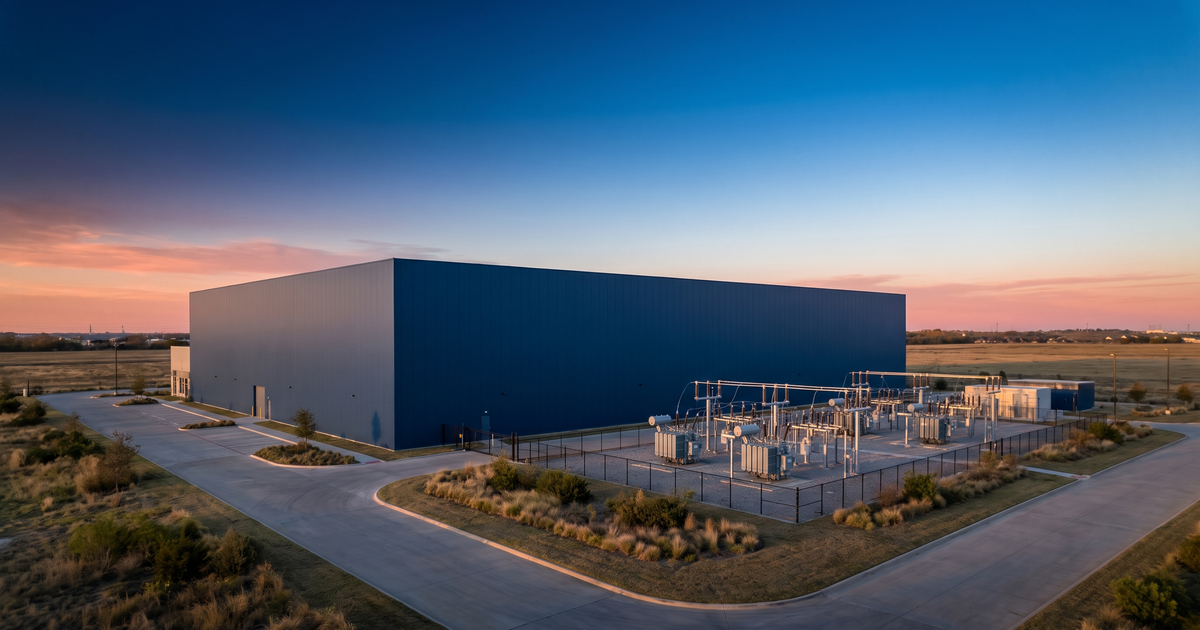
Research checked September 5, 2026. Featured and social images are AI-generated editorial illustrations; the actual site and architectural design have not been verified.
Join 35,000+ Low Voltage Pros
Get weekly permit updates, tool deals, job opportunities, and industry news. No spam, unsubscribe anytime.