
Join Low Voltage Nation — Find project opportunities and showcase your company to thousands of industry professionals
A $540M state filing names Corgan for STACK’s planned DFW02B building. Review the 2027–2028 schedule, campus capacity distinctions and prospective low-voltage opportunities.
A $540 million construction estimate puts STACK’s DFW02B building in Lancaster, Texas, on the radar for data-center contractors. A new state registration describes a two-story office and data-center facility, names Corgan as design firm, and sets a March 2027 start target. The opportunity now is to identify the delivery team, package boundaries and procurement milestones while those details are still emerging.
The Texas Department of Licensing and Regulation registration, TABS2027002755, provides the building-level evidence. STACK’s materials connect DFW02B to its larger South Dallas campus. Taken together, they establish a substantial planned phase with a named designer. Actual mobilization, financing close, tenant identity and specialty-trade awards remain unverified in the sources reviewed October 20, 2026.
What the DFW02B filing establishes
Registered October 5, the project is located at 1130 E. Belt Line Road in Lancaster, Dallas County. TDLR identifies privately funded, ground-up construction comprising office and data-center space. The direct record gives an area of 360,044 square feet and lists SI DFW02CAMPUS LLC as owner. Its tenant field is unassigned.
| Measure | Filed value | Meaning |
|---|---|---|
| Construction estimate | $540 million | DFW02B building scope |
| Building area | 360,044 square feet | Two-story office/data center |
| Start target | March 1, 2027 | Scheduled date |
| Completion target | December 14, 2028 | Scheduled date |
| Registration status | Project Registered | Local permit unverified |
| Designer | Corgan | Filed design firm |
These values come from the direct B-building registration. The $540 million figure is an estimate associated with that filing. An executed construction contract, dedicated financing close and expenditure to date have not been established. Likewise, the scheduled completion date does not establish an operational opening or customer acceptance date.
For a contractor deciding whether to devote estimating time, the immediate missing document is a defined package with a buyer and a release schedule. A registration provides a useful prospecting lead. Pricing requires drawings, specifications, commercial terms and clear responsibility for the work being solicited. No public B-building bid deadline or prequalification invitation was verified for this report.
Keep the building and campus capacity separate
STACK’s current campus brochure labels DFW02B at 54 MW on its site plan. Its specification page gives 312 MW of campus critical capacity, expandable to 504 MW, across 193 acres. Building B is included in that campus total. The figures describe planned critical capacity; current energized load and B-specific utility demand remain unknown.
The campus webpage presents several different figures: a 310 MW tile, an up-to-460 MW offer in its hero, and broader 300-plus/500-plus MW language. Their scope differences remain unresolved. This article retains each source’s basis rather than deriving an available-capacity figure from them.
That distinction matters commercially. A design allocation does not tell an installer when a specific hall will be released, which customer equipment will be installed, or how much fit-out work a particular buyer will purchase. Capacity becomes useful estimating context when it is paired with building, phase, delivery and responsibility boundaries.
The brochure also allows for shell and turnkey delivery. Those alternatives make procurement questions especially important: who buys facility infrastructure, who controls the customer fit-out, and which systems are handed over before tenant installation? The reviewed material does not settle those questions for B. Contractors should seek that allocation before treating a campus headline as an addressable package.
A campus with changing plans and overlapping registrations
STACK’s April 29, 2024 announcement described an earlier 220 MW, six-building concept on more than 100 acres, with a mid-2026 target. That release is historical context. It does not establish B-building delivery, and its earlier master plan should not be added to the newer campus figures.
Two other state registrations help establish the phase family. DFW02A, TABS2025010772, lists 1000 E. Beltline Road, a $79,738,000 estimate and 360,028 square feet. DFW02A-P2, TABS2026008287, lists 1100 E. Beltline Road, a $202,150,516 estimate and 360,044 square feet. Both name SI DFW02A, LLC and Corgan or Corgan Associates.
The overlapping areas and phase descriptions require reconciliation before anyone totals them. For this report, B keeps its own estimate, area and schedule. A supplier comparing leads should use registration numbers and building names alongside addresses so that multiple announcements do not become duplicate sales opportunities or inflated campus totals.
Who is named—and where the delivery team remains open
| Organization | Documented role | Evidence |
|---|---|---|
| STACK Infrastructure | Campus developer/operator | Campus page |
| SI DFW02CAMPUS LLC | Filed B-building owner | TDLR |
| Corgan | Filed design firm | TDLR |
| Oncor | Historical campus utility | 2024 owner release |
Corgan’s data-center practice provides company context; its B-building appointment is supported by the state filing. Detailed engineering disciplines are not disclosed there. No general contractor, construction manager, electrical contractor, low-voltage integrator, mechanical contractor or commissioning provider was verified in the reviewed evidence.
The 2024 release names Oncor and a dedicated substation at campus level. B-specific service allocation, current expansion approval, substation commissioning and energization dates remain unverified. A prospective trade partner needs an explicit handover sequence: when permanent power becomes available, when systems can be tested, and which party controls acceptance. The historical utility relationship alone cannot answer those scheduling questions.
Where low-voltage work could emerge
The brochure describes campus connectivity, security and fire-protection features, including four meet-me rooms/entry points, biometric access, CCTV and heat/smoke/VESDA detection. These are owner design claims at campus level. The table separates that evidence from prospective work inferred from facility functions; no installer or package award is implied.
| Work area | Evidence or opportunity | Next detail needed |
|---|---|---|
| Fiber / OSP | Campus entry-room concept | B routes and buyer |
| Access / CCTV | Campus security features | B standards and award |
| Fire interfaces | Campus detection concept | Approved B design |
| Structured cabling | Prospective facility links | Quantities and boundary |
| Controls / OT | Prospective plant networks | Protocols and buyer |
| Testing / turnover | Prospective acceptance work | Criteria and provider |
For fiber specialists, useful qualification questions concern entrance routes, pathway ownership, demarcation points and the party responsible for testing each link. A campus carrier map is useful location context, but its nearby routes and legacy brands do not establish signed service, physically diverse B-building paths or construction awards. Those need current project documents.
For security integrators, the next useful evidence is a B-specific device schedule and integration standard. Door hardware, reader interfaces, video retention, network ownership and turnover responsibilities should be confirmed with the appointed buyer. The campus feature list supplies an opening for that conversation; it does not supply quantities or an approved equipment bill.
Controls and operational-technology networking are analyst-identified opportunities associated with power and cooling functions. The scope could be divided among equipment vendors, electrical trades, mechanical trades and specialist integrators. A responsibility matrix would show who supplies network hardware, installs pathways, terminates links, configures systems and records final tests. Until that matrix is available, a single assumed “controls package” would be premature.
LVN has not assigned a low-voltage dollar estimate to DFW02B. Applying a broad percentage to the $540 million construction estimate would suggest precision unsupported by the disclosed packages. The useful commercial measure will be a defined work package, its installation conditions and its acceptance requirements.
Jobs, trades and preparation
Construction headcount, permanent staffing and current project-specific vacancies remain undisclosed or unverified. STACK’s careers page is a general employer resource. A relevant listing should identify the legal employer, location and actual duties before a worker treats it as a DFW02B opening. Contractor hiring may follow a separate route after appointments become public.
For technicians preparing for potential work, practical areas to review include fiber inspection and testing, cable identification, pathway coordination, grounding and bonding, access-control interfaces, documentation and commissioning support. The Fiber Optic Association workforce resource is a general training entry point. It does not establish a project-mandated certification or guarantee employment.
A contractor capability package can describe the systems the firm has actually delivered, available crews, relevant training and examples of completed test records. Site access, safety training, lift qualifications, insurance, bonding and manufacturer credentials should be checked against the eventual procurement documents. None is presented here as a verified B-building requirement.
The milestones that would make this opportunity actionable
The next meaningful updates are local permit issuance, verified B-building mobilization, delivery-team appointments and released trade packages. Utility service details, a customer disclosure or financing documentation could also clarify how the schedule will be executed. A photograph should be tied to the correct building and capture date before it is used to establish progress; the brochure photograph does not provide that identification.
Location also needs care. TDLR lists Lancaster, Texas 75146. The address geocoder returns a Wilmer, Texas 75172 postal label for the same street reference. The filing’s locality is retained, and the map point serves as an address reference. Surveyed B-building geometry and the municipality/postal-label discrepancy remain unresolved.
For now, DFW02B is a well-defined planned building with a large filed estimate and a named designer. The strongest next step for a prospective trade partner is to verify the contracting route and package timing against those building-level facts.
Follow the project through LVN Signal for source-linked construction intelligence and low-voltage opportunity context. Use the project name and registration number when qualifying a lead, then confirm the current buyer, scope and schedule before committing estimating resources.
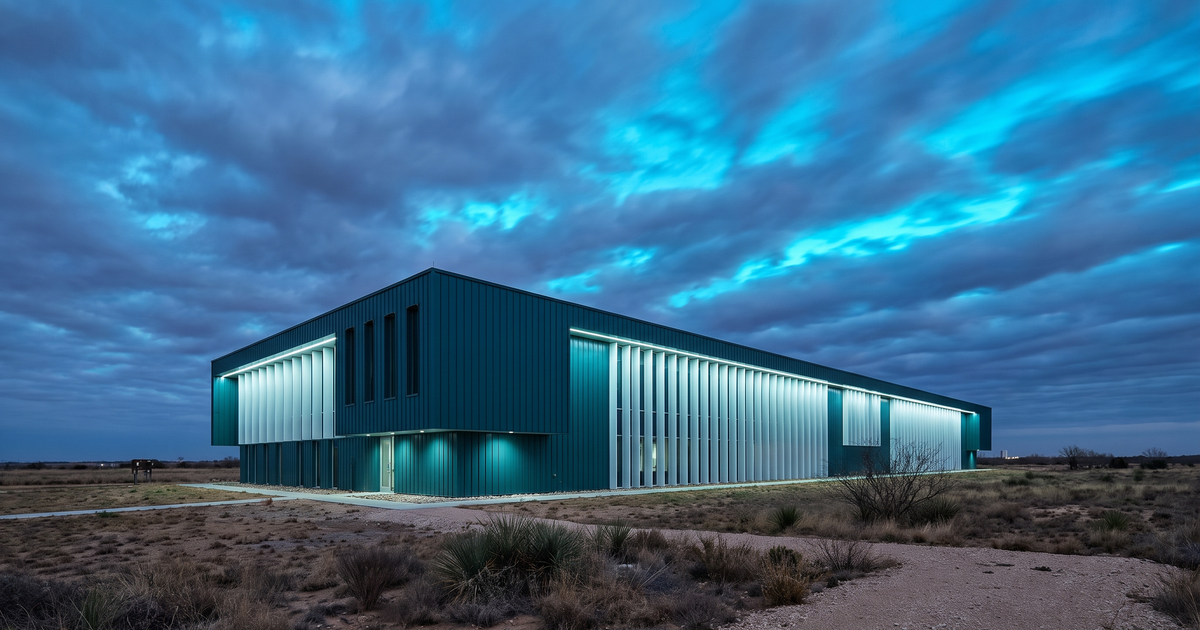
Reporting reviewed October 20, 2026. Dollar amounts are USD. Generated artwork is an editorial illustration and does not depict the verified building design or current site progress.
Join 35,000+ Low Voltage Pros
Get weekly permit updates, tool deals, job opportunities, and industry news. No spam, unsubscribe anytime.